


Custom labels, packaging, displays, websites, branding, and free business tools built to help product brands launch, grow, and sell more.
This Stirred Kitchen Co. portfolio example shows Jessica Trimm’s work on a coordinated meal-label design family. For another small food business, the useful lesson is how to organize changing product names within a recognizable brand system.
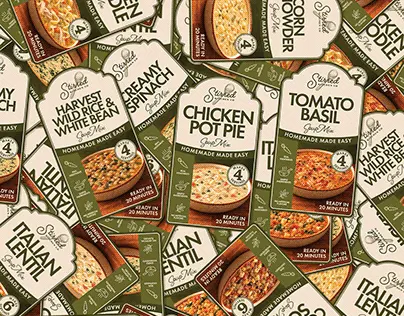
When reviewing a family of labels, begin with three questions: Which business made this? Which product is this? Where do I find the additional information I need? A design can be attractive while still making one of those answers difficult to find. Repeating the brand’s main visual elements helps the items belong together; giving the product name its own clear area helps distinguish one meal from another.
For your own range, decide which parts of the label are fixed and which parts change. Fixed elements might include the logo placement, broad typography choices and spacing. Variable elements might include the product name, flavor, quantity and the copy supplied for that specific item. Planning that distinction is useful whether you have three versions today or expect to add more later.
Use the longest product name and the most copy-heavy version when checking the layout. A system that only fits the shortest name may force inconsistent type sizes or crowded text as the range grows. Review each label at actual size, not only in a large screen preview.
The portfolio image demonstrates design; it does not specify the material or adhesive you should buy. For your order, describe the container, surface, storage and handling. Moisture, oil, condensation and curved surfaces can change what needs to be tested. Place a sample on the actual clean container and check it under the conditions in which you expect to use it.
For roll labels applied with equipment, also confirm the roll specifications the equipment requires. For hand application, check that the label can be positioned consistently without covering a lid seam, edge or other important part of the package.
Bring your logo files, package measurements, a photo of the container, quantities per version and the copy you want printed. Identify what is already approved and what still needs a decision. If you need design support, say so at the quote stage rather than assuming a print-only file check includes a complete redesign.
This feature describes the visible design example. It does not claim a sales result, regulatory approval or a particular material specification for the client’s project. Check the requirements that apply to your own product before approving your artwork.
Start your custom roll label quote, use the print-ready artwork checklist, or ask Jess about a coordinated label family. See additional client design examples at URGrafix.
Custom labels, packaging, displays, websites, branding, and free business tools built to help product brands launch, grow, and sell more.