


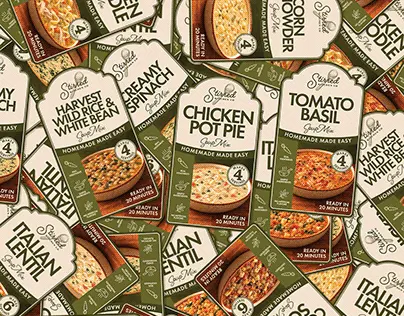

Custom labels, packaging, displays, websites, branding, and free business tools built to help product brands launch, grow, and sell more.
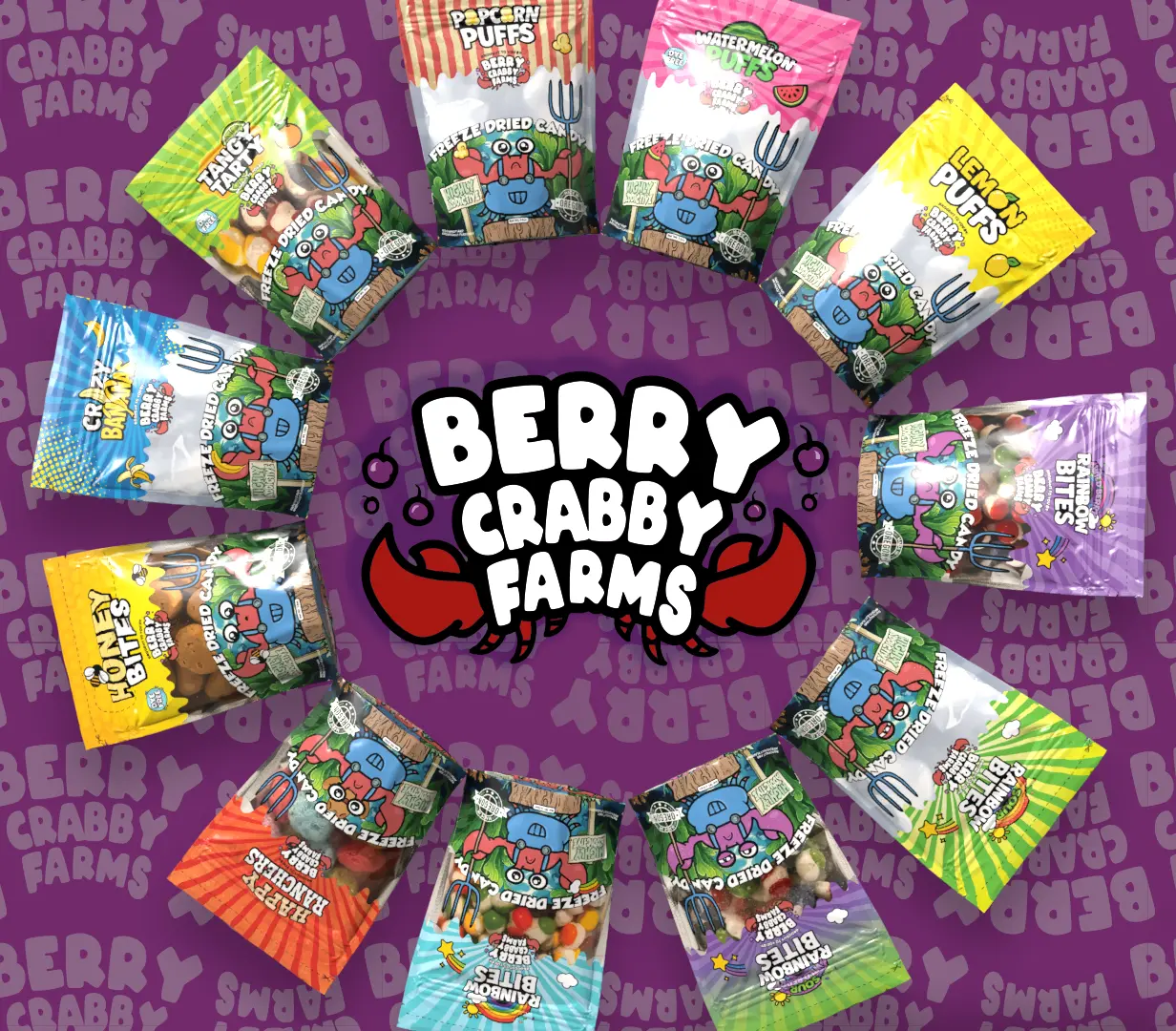
Berry Crabby Farms’ packaging work is part of Jessica Trimm’s portfolio. The image below shows a coordinated family of freeze-dried candy packaging designs. It is a useful example for a small business deciding how several products can look related without making every flavor look identical.
“If any of our friends or family needs custom packaging at an affordable rate Jessica Trimm Is your girl!! Our company is just like one of our babies. We love it and we want what’s best for it. We reached out to more than 30 different companies, about making bags for us and designs. We finally picked Jessica, she has done phenomenal from start to finish. We look forward to working with her in the future ❤️”
— Berry Crabby Farms, from their Facebook post, supplied for this project feature
Look at the designs as a group first, then consider one package by itself. A product family needs both relationships: a customer should recognize the business across the range, while still being able to identify the individual item they want. The repeated brand presence provides a common starting point. The product-specific artwork and names provide the next level of information.
This distinction matters when preparing your own artwork brief. “Make these match” is less precise than naming the elements that should remain consistent: brand placement, product-name area, information hierarchy and the treatment of the back panel. Then identify what can change for each flavor or product.
A strong flat layout still needs to work on the actual bag. Confirm the exact size and template, fill a physical sample, and check the visible panel after filling. Keep essential artwork clear of the closure and seal areas specified by the supplier. If you are changing sizes, do not simply stretch the existing artwork: review the layout on the new template.
The portfolio and client review show design work and the client’s stated experience. They do not establish a particular sales increase, shelf-life result, production specification or delivery promise. Your own project should be quoted against your actual size, quantity, material needs and artwork condition.
For a similar project, start a printed Mylar bag quote and bring your product list. Read the artwork checklist, or ask Jess for help planning your packaging family. More design work is available at URGrafix, Jessica’s design and print studio.
Custom labels, packaging, displays, websites, branding, and free business tools built to help product brands launch, grow, and sell more.